
Two people may be the same age, but their strength, energy, recovery, and independence can look very different. Why does frailty develop earlier in some people?
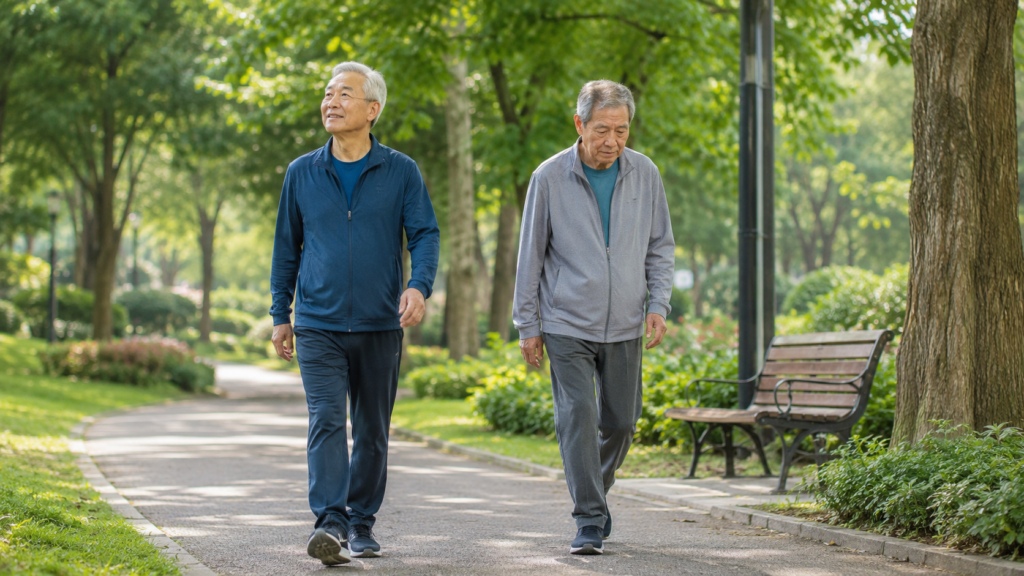
Two people may both be 70 years old.
One may walk quickly, travel, exercise, and recover well after illness. Another may feel exhausted, walk slowly, lose strength, and take much longer to feel normal again after the same illness.
They are the same age on the calendar. But their bodies may not be aging at the same speed.
This is why frailty is not simply about getting older. It is also about how much reserve the body has, how well it responds to stress, and how effectively it recovers.
Chronological Age vs Biological Age
Chronological age is the number of years a person has lived.
Biological age is different. It reflects how well the body’s systems are functioning. These systems include muscles, blood vessels, metabolism, immune function, brain health, and repair capacity.
A simple way to think about it is this:
Chronological age is like the date on a calendar. Biological age is closer to the condition of the body.
Two people may both be 65. One may have strong muscles, good balance, steady energy, and quick recovery. The other may already have reduced strength, slower movement, frequent fatigue, and difficulty bouncing back after illness.
This does not mean one person has aged “correctly” and the other has not. Aging is shaped by many factors over time, including genetics, chronic disease, lifestyle history, environment, inflammation, injuries, stress, and past illness.
Frailty often appears when biological aging affects several systems at once.
Frailty and Resilience
Frailty is closely linked to reduced resilience.
Resilience means the body’s ability to recover after stress. In medicine, stress can include infection, surgery, injury, poor sleep, a fall, emotional strain, or a period of illness.
A person with strong resilience may get the flu, rest for a few days, and gradually return to normal.
A person with reduced resilience may experience the same flu very differently. They may feel weak for weeks, lose muscle, walk more slowly, or need more help with daily activities afterward.
This is why frailty is not only about how someone feels on a normal day. It is also about what happens when the body is challenged.
The body needs reserve to respond to stress. Muscles support strength and balance. The immune system helps fight infection. Metabolism supplies energy. The heart, lungs, kidneys, and brain all help the body adapt.
When these reserves become lower, recovery becomes harder. Frailty becomes more visible when the body has less ability to return to its previous level after stress.
The Slow Build-Up of Biological Stress
Frailty usually does not appear overnight.
It often develops gradually through years of small biological changes. These changes may be easy to miss at first.
A person may feel slightly more tired than before. Walking uphill may take more effort. Recovery after travel, poor sleep, or illness may take longer.
Over time, small stresses can accumulate.
Muscle may become easier to lose. Inflammation may stay slightly higher. Energy production may become less efficient. Repair processes may slow down. Appetite, activity, sleep, and metabolism may also change.
One change alone does not necessarily mean someone is frail. But when several systems lose reserve together, the body may become more vulnerable.
This is why frailty is often described as a syndrome. It is not usually caused by one single problem. It reflects a broader change in strength, balance, energy, and recovery.
Chronic Conditions Can Increase Vulnerability
Long-term health conditions can also influence how early frailty develops.
Diabetes may affect blood vessels, nerves, muscles, and energy metabolism over time. Cardiovascular disease can reduce the body’s ability to deliver oxygen and nutrients during stress. Chronic kidney disease may affect metabolism, inflammation, and energy. Obesity may be linked with chronic inflammation, reduced mobility, and higher physical strain.
Repeated hospitalizations can also matter. Time spent in bed, illness-related weight loss, reduced activity, and slower recovery can all reduce physical reserve.
This does not mean everyone with a chronic condition will become frail. Many people with long-term conditions remain active and independent for years.
But chronic disease burden can make the body work harder. When several conditions are present together, the body may have less reserve available when a new stress appears.
That is why two people of the same age may respond very differently to the same infection, injury, or surgery.
Lifestyle Matters — But Frailty Is Not About Blame
Lifestyle plays an important role in healthy aging.
Nutrition, physical activity, sleep, and social connection all influence resilience. Over many years, these factors can affect muscle strength, balance, metabolism, mood, immune function, and recovery.
But frailty is not simply the result of poor choices.
Some people have genetic risks. Some live with chronic illness from a young age. Some experience repeated infections, injuries, caregiving stress, financial strain, poor access to healthy food, unsafe neighborhoods, pollution, or limited medical care.
Others may have lived active lives but still develop frailty because of illness, inflammation, hospitalization, medication burden, or age-related biological changes.
This matters because frailty should not be viewed as a personal failure.
It is better understood as a change in the body’s reserve and recovery capacity over time. Healthy habits may support resilience, but they are only one part of a larger picture.
Why Early Changes Matter
Frailty can be easier to understand when we pay attention to early changes.
Some people may notice they are walking more slowly than before. Others may find jars harder to open, shopping bags harder to carry, or stairs more tiring. Some may feel persistent fatigue or reduce activities they used to enjoy.
Other possible signs include slower recovery after illness, reduced grip strength, unintentional weight loss, or a general sense that the body has less energy and reserve.
These signs do not automatically mean a person has frailty. They can have many causes, including temporary illness, medication effects, poor sleep, stress, pain, or other medical conditions.
But changes in strength, mobility, energy, weight, or recovery may be worth discussing with a healthcare professional, especially if they are persistent or worsening.
Early recognition can help people understand their health trajectory more clearly. It can also help separate normal day-to-day variation from patterns that deserve medical attention.
Key Takeaways
- People of the same age can age at very different speeds.
- Chronological age tells us how many years someone has lived, but biological age reflects how well the body functions.
- Frailty is closely linked to reduced resilience and lower physical reserve.
- Chronic disease, inflammation, lifestyle history, past illness, and recovery capacity can all influence frailty risk.
- Early changes in strength, mobility, energy, or recovery may be important signals to notice.
Looking Ahead
If frailty is linked to reduced resilience, one important question follows:
What biological processes reduce resilience over time?
Researchers increasingly pay attention to chronic low-grade inflammation, sometimes called inflammaging. This type of inflammation may slowly affect muscles, metabolism, immune function, and recovery as people age.
The next article will explore how chronic inflammation may accelerate aging and why it matters for strength, recovery, and resilience.
Conclusion
Frailty is not simply about age.
It reflects how the body’s systems respond to stress, repair damage, and maintain reserve over time. Two people may share the same birthday, but their muscles, metabolism, immune function, chronic disease burden, and recovery capacity may be very different.
Understanding why frailty develops earlier in some people is an important step toward understanding healthy aging.
Next Reading
The Remarkable Link Between Inflammation and How You Age
In the next article, we will explore what chronic low-grade inflammation is, why it becomes more common with age, and how it may affect strength, recovery, and resilience.
Previous Article
Frailty Syndrome Is So Important to Healthy Aging
Sources and Further Reading
World Health Organization. “Ageing and health.”
https://www.who.int/news-room/fact-sheets/detail/ageing-and-health
World Health Organization. “Healthy ageing and functional ability.”
https://www.who.int/news-room/questions-and-answers/item/healthy-ageing-and-functional-ability
National Institute on Aging. “What Do We Know About Healthy Aging?”
https://www.nia.nih.gov/health/healthy-aging/what-do-we-know-about-healthy-aging
National Institute on Aging. “Older Adults and Healthy Aging.”
https://www.nia.nih.gov/health/topics/older-adults-and-healthy-aging
The Lancet Healthy Longevity. “Recognising frailty throughout adulthood.”
https://www.thelancet.com/journals/lanhl/article/PIIS2666-7568(25)00084-4/fulltext
Journal of the American Geriatrics Society. “Frailty in Older Adults: Evidence for a Phenotype.”
https://agsjournals.onlinelibrary.wiley.com/doi/10.1046/j.1532-5415.2001.49256.x
Age and Ageing. “Frailty in elderly people.”
https://academic.oup.com/ageing/article/42/3/302/24179
Nature Aging. “Hallmarks of aging: An expanding universe.”
https://www.nature.com/articles/s43587-022-00253-7