
Subtitle:
Inflammation is normally part of healing. But when low-grade inflammation continues quietly over time, it may contribute to aging, weakness, and slower recovery.
Inflammation is not always bad.
When you cut your finger, twist an ankle, or fight an infection, inflammation helps the body respond. It brings immune cells and repair signals to the area that needs help. Swelling, warmth, redness, or soreness can be signs that the body is protecting and repairing itself.
This type of inflammation is usually short-term. It turns on when needed, helps solve the problem, and then settles down.
The concern is different: what happens when inflammation does not fully switch off?
Scientists call this long-term, low-grade inflammatory state inflammaging. It is one of the important ideas in aging science because it may help explain why aging can affect strength, recovery, immunity, and resilience at the same time.
Inflammation Is Part Of Healing
Inflammation is a normal part of the body’s defense system.
When the body detects injury, infection, or stress, the immune system sends signals to respond. These signals help increase blood flow, bring immune cells to the area, and start repair.
In this setting, inflammation is useful. It helps the body protect itself and begin healing.
The key point is timing.
Short-term inflammation is usually helpful. Long-term inflammation can become a problem.
When Inflammation Becomes Chronic
Chronic low-grade inflammation is different from the inflammation people notice after an injury.
It may not cause clear pain, swelling, or fever. A person may not feel it directly. Instead, inflammatory activity may stay slightly elevated in the background for years.
Over time, this quiet inflammation may place stress on tissues and organs.
This is where the word inflammaging comes in. Researchers use it to describe age-related increases in inflammatory activity.
Inflammaging does not mean every older adult has a disease. It also does not mean inflammation is the only reason people age. Rather, it suggests that the immune system and repair systems may become less balanced with age.
The body may become less precise at turning inflammation on when needed and calming it down afterward.
Why Inflammaging Matters
Healthy aging is not only about living longer. It is also about maintaining reserve.
Reserve means the body’s ability to handle stress and recover. For example, can the body rebuild strength after bed rest? Can it recover after an infection? Can it return to normal energy after a difficult period?
When reserve is strong, recovery is easier. When reserve is lower, even a small stressor may have a larger effect.
Researchers are interested in inflammaging because chronic inflammatory signals have been associated with several features of age-related decline, including fatigue, reduced muscle strength, slower walking speed, and slower recovery.
The relationship is complex. Inflammation may contribute to these changes, but it is not the only factor. Aging also involves metabolism, blood vessels, nerves, hormones, cells, and tissue repair.
Still, inflammation matters because it can affect many systems at once.
How Chronic Inflammation May Affect The Body
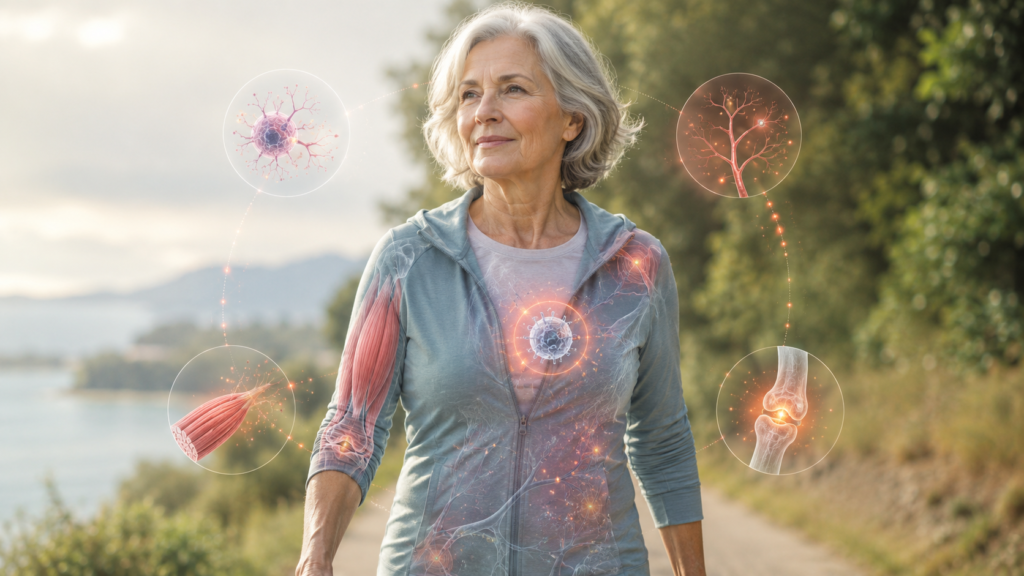
Inflammaging is often described as systemic. This means it may affect the whole body, not just one organ.
In the muscles, long-term inflammation has been associated with reduced strength, muscle loss, and slower recovery after physical stress. This may be one reason some people lose strength faster as they age.
In the blood vessels, inflammation may affect the inner lining of vessels and the way circulation responds to stress. Healthy circulation is important for energy, walking, healing, and organ function.
In metabolism, chronic inflammation may influence how the body handles energy and blood sugar. This may be one reason aging is sometimes linked with lower stamina and slower recovery after exertion.
In tissue repair, inflammation can be helpful when it is well controlled. But if inflammatory signals stay active for too long, they may interfere with normal rebuilding. The body may become less efficient at repairing small injuries.
In the immune system, aging can create a confusing pattern. The immune system may become less responsive to new challenges, yet more inflammatory in the background. Researchers study this balance through concepts such as immune aging and inflammaging.
Together, these changes help explain why aging often feels systemic. It may show up as lower energy, weaker muscles, slower healing, and greater vulnerability after illness.
The Link Between Inflammation And Frailty
Frailty is closely related to reduced reserve and resilience.
A frail person may have less strength, slower walking speed, lower energy, and more difficulty recovering after illness or injury. Frailty is not simply “old age.” It reflects how much capacity the body has left to respond to stress.
Researchers have found associations between inflammatory markers and frailty-related features. These may include fatigue, muscle loss, reduced strength, slower walking, and slower recovery.
It is important not to overstate this.
Chronic inflammation does not prove that someone will become frail. It does not explain every case of frailty. But it may contribute to the biological environment in which frailty develops.
This is why inflammaging is an important concept in healthy aging science.
Why This Matters For Healthy Aging
Two people may be the same age, but their resilience can be very different.
One person may recover quickly after illness. Another may take weeks to regain strength. One may stay active and independent. Another may become vulnerable after a small health setback.
Chronic low-grade inflammation may be one factor that helps explain this difference.
Because inflammation can influence muscles, blood vessels, metabolism, immune function, and tissue repair, it helps explain why aging does not happen in only one body part.
Aging is systemic. Inflammaging may be one reason.
Key Takeaways
- Inflammation is a normal part of healing.
- Short-term inflammation helps the body respond to injury, infection, or stress.
- Chronic low-grade inflammation may remain quietly active over time.
- Age-related chronic inflammation is often called inflammaging.
- Inflammaging may affect muscles, metabolism, blood vessels, immune function, and tissue repair.
- Researchers are studying how chronic inflammation may contribute to frailty and reduced resilience.
Looking Ahead
If chronic inflammation is one part of aging, another important question is:
Why does the body repair itself more slowly with age?
Researchers are studying how aging affects the body’s natural repair systems, including cells, tissues, blood vessels, and recovery pathways.
This will be the focus of the next article.
Conclusion
Chronic inflammation does not mean aging is caused by one single factor.
Aging is a larger biological puzzle. It involves the immune system, metabolism, muscles, blood vessels, tissue repair, and many other systems working together.
Inflammaging is one important piece of that puzzle.
Understanding chronic low-grade inflammation helps explain why aging may affect strength, recovery, energy, and resilience at the same time.
Next Reading
The Secrets Your Body Takes Longer to Heal With Age
In the next article, we will explore why the body’s natural repair systems may become less efficient over time, and how slower repair may affect recovery, strength, and healthy aging.
Previous Article
The Hidden Reasons Why Frailty Starts Earlier
Sources and Further Reading
- National Institute on Aging — Inflammaging: Mechanisms, Markers, and Intervention Strategies
- World Health Organization — Ageing and Health
- WHO — Healthy Ageing and Functional Ability
- Nature Reviews Cardiology — Inflammageing: Chronic Inflammation in Ageing, Cardiovascular Disease, and Frailty
- Signal Transduction and Targeted Therapy — Inflammation and Aging
- PubMed — Chronic Inflammation and the Hallmarks of Aging