
Shanghai is building a robust infrastructure for international health screening—but its greater opportunity lies in what comes next: deeper diagnosis, long-term health management, and seamless access to emerging medical innovation.
For decades, expatriates and global executives seeking premium health checks have looked to Japan, Singapore, South Korea, and Switzerland. Today, Shanghai is entering the same conversation. This shift is not driven by a single high-profile check-up center, but by a powerful, multi-layered healthcare ecosystem.
The real question is no longer simply whether Shanghai can perform a high-quality health check. It is whether the city can turn medical screening into a complete, integrated health journey. As international care coordinators like Vitashan Care look to the future, Shanghai’s unique medical advantages are redefining the landscape of medical tourism in China.
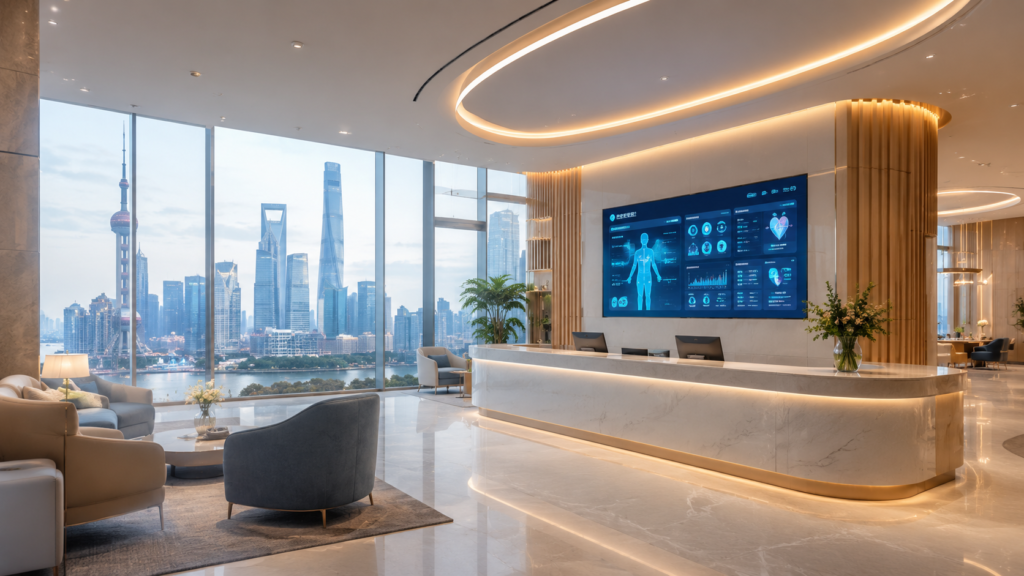
1. Infrastructure: Shanghai’s Global Connectivity and Medical Tourism Potential
A premier health screening destination must first be effortless to reach. Shanghai already operates at a massive global scale, serving as a natural gateway for international travelers.
- Massive Passenger Inflow: In 2025, Pudong and Hongqiao airports handled 135 million passenger trips, connecting Shanghai with 302 destinations across 54 countries.
- The Gateway to China: The two airports processed 39.9 million entry and exit passenger trips, representing 28.9% of China’s total air-border traffic.
- Surging Foreign Arrivals: Shanghai recorded 5.59 million airport arrivals by foreign travelers in 2025, a massive 39.7% increase year-on-year, with tourism accounting for 58.5% of those entries.
Shanghai does not need to create international traffic from scratch. Millions of people already arrive annually for business, tourism, and family travel. The immediate opportunity for the medical tourism sector is to make premium health screening a practical, credible, and seamless part of a wider itinerary.
2. Clinical Strength: Why Shanghai’s Healthcare System Outperforms Stand-Alone Clinics
Shanghai’s core medical strength is anchored by its world-class public and private hospitals, creating an integrated system that stand-alone commercial screening centers simply cannot match.
By the end of 2024, Shanghai’s healthcare infrastructure reached an unprecedented scale:
- 6,431 healthcare institutions
- 193,900 operational hospital beds
- 325,100 professional health workers
- Over 282 million patient visits recorded in a single year
This immense scale allows Shanghai to offer comprehensive screening programs across a broad range of medical specialties:
- Oncology & Cardiovascular Risk: Advanced early detection for cancers and heart disease.
- Metabolic & Digestive Health: Specialized endoscopy and metabolic profiling.
- Women’s & Men’s Health: Gender-specific preventive evaluations.
- Musculoskeletal & Functional Decline: Assessing mobility, joint health, and healthy aging.
The Diagnostic Advantage: When an abnormal screening result appears, a patient in Shanghai doesn’t just receive a report with a recommendation to “see another doctor.” Instead, they can immediately transition into advanced imaging, pathology, top-tier specialist reviews, or multidisciplinary care within the same network.
3. The Shift to Precision Health Screening and Biomedical Innovation
Modern executive health checkups in Asia are evolving. A truly valuable preventive health program must move away from generic “one-size-fits-all” packages and shift toward personalized assessment based on age, lifestyle, symptoms, and family history.
Shanghai’s thriving biomedical research environment directly supports this transition into precision medicine:
- Research Hub: The city hosts six national clinical medical research centers and 33 municipal hospitals featuring over 3,000 demonstration beds dedicated to research.
- Global Pharma Presence: 18 of the world’s top 20 pharmaceutical companies and 18 of the top 20 medical-device companies have established regional headquarters, R&D centers, or production facilities in Shanghai.
This ecosystem drives rapid clinical adoption of advanced medical imaging, in-vitro diagnostics, and digital health tools. However, innovation only creates value when it answers a meaningful clinical question—a philosophy that guides how Vitashan Care structures tailored health journeys for its clients.
4. The Three-Layer Advantage of Shanghai’s Healthcare Ecosystem
What makes Shanghai a unique hub for international health consumers? Its potential can be understood through three interconnected capabilities:
I. Screening Breadth
Shanghai efficiently combines advanced imaging, laboratory testing, endoscopy, and functional assessments across multiple fields. The goal is not to upsell the largest possible package, but to build a highly targeted program around an individual’s actual risk factors, completed within a tight schedule suitable for international visitors.
II. Diagnostic Depth
A machine can detect an anomaly, but it cannot decide the next clinical step. The value of screening depends heavily on the clinical experience of the physician interpreting the results. Shanghai’s deep medical expertise allows doctors to accurately distinguish a harmless physiological variation from a finding that requires urgent intervention.
III. Management Continuity
A health check is merely a snapshot. The real value begins when findings—such as borderline blood sugar, fatty liver, or reduced muscle mass—are translated into an actionable, long-term health plan. Comprehensive care includes nutrition, metabolic control, sleep support, and remote follow-ups, transforming a one-off purchase into a continuous journey of risk management.
5. Integrating Traditional Chinese Medicine (TCM) into Preventive Healthcare
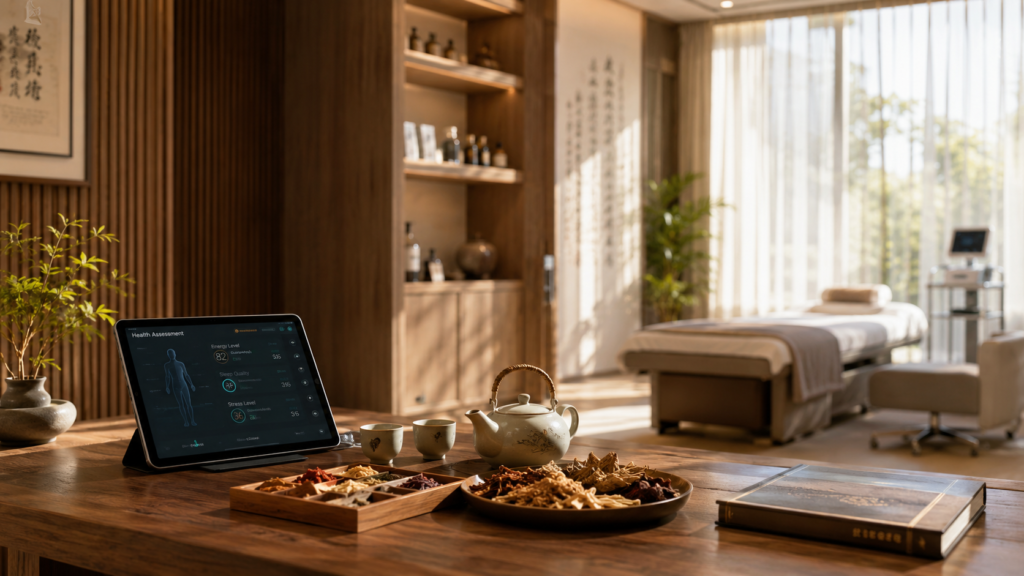
Traditional Chinese Medicine (TCM) introduces a distinctive, proactive layer to long-term health management through the concept of zhi wei bing (治未病)—“treating disease before it develops.”
Rather than replacing modern diagnostics, TCM acts as a powerful complement:
- The Data: By the end of 2023, all secondary and tertiary TCM hospitals in Shanghai had established dedicated preventive-treatment departments.
- The Application: While Western medicine excels at identifying measurable clinical risks, TCM focuses on managing sub-health states, chronic fatigue, sleep disturbances, digestive recovery, and overall functional well-being.
This East-meets-West paradigm offers international patients a holistic health approach that is difficult to find in other global medical hubs.
6. The Shanghai-Hainan Synergy: Connecting Screening with Boao Lecheng
Shanghai does not have to provide every innovative treatment within its municipal borders. The Boao Lecheng International Medical Tourism Pilot Zone in Hainan offers a unique, policy-enabled extension for patients who require access to cutting-edge global therapeutics.
- Special Regulatory Pathway: By late 2025, Lecheng operated over 30 medical institutions and had approved the first use in China of more than 520 international innovative drugs and medical devices, benefiting over 190,000 patient visits.
- Surging Growth: In 2024, the zone recorded 413,700 medical-tourism visits, a 36.8% year-on-year increase.
A Responsible Care Pathway: Through cross-regional coordination, patients can undergo broad health screening and deep diagnosis in Shanghai, build a comprehensive management plan, and leverage the Lecheng pathway only when access to an unreleased global medical innovation is clinically necessary and legally regulated.
7. Bridging the Gap: What International Patients Still Need
While Shanghai possesses world-class airports, specialists, and research facilities, the international service layer connecting these assets is still evolving. Overseas visitors often face:
- Fragmented medical booking platforms
- Language barriers and uneven multilingual support
- Complex cross-hospital referral systems
- A lack of structured, long-term follow-up once they return home
This is where dedicated international care management becomes essential. Shanghai does not simply need more health check-up packages; it needs seamless coordination.
At Vitashan Care, we bridge this gap by providing international clients with a single, streamlined pathway. From determining the right screening protocols and interpreting complex findings to facilitating top-tier specialist inputs and coordinating continuous health management after leaving China, we ensure your health journey is seamless, professional, and globally integrated.
FAQ: Medical Tourism & Health Screenings in Shanghai
Can foreigners get an executive health checkup in Shanghai?
Yes. Shanghai features numerous international medical centers and joint-venture hospitals that cater to expatriates and global executives, offering English-speaking staff and western-standard amenities. To avoid fragmented booking and ensure top-tier specialist follow-ups, partnering with a care coordinator like Vitashan Care is highly recommended.
Why choose Shanghai over other medical tourism destinations in Asia?
Unlike destinations that rely on stand-alone commercial check-up clinics, Shanghai offers an entire integrated medical ecosystem. This means if a screening reveals a complex issue, you have immediate access to world-class clinical specialists, cutting-edge biomedical research, preventive TCM, and advanced global drugs via the Hainan Lecheng pathway.
(Sources: Data compiled from official reports by the Shanghai Municipal Government, Shanghai Municipal Health Commission, and the National Development and Reform Commission.)
Data Sources & References:
- Aviation & Foreign Arrivals Data (2025): Compiled from official statistics released by the Shanghai Municipal People’s Government.
- Healthcare Infrastructure & Status Report (2024): Based on the annual medical resource registry from the Shanghai Municipal Health Commission.
- Biomedical Ecosystem & Pharma R&D Trends: Data sourced from the Science and Technology Commission of Shanghai Municipality.
- Boao Lecheng Pilot Zone Statistics: Sourced from the National Development and Reform Commission (NDRC) and the official portal of the Boao Lecheng International Medical Tourism Pilot Zone.
Related Post: How to Choose the Right Health Screening at Age 40 & Beyond?
Related Post: PET-CT Cost Compare, Money Saved Can Pay for Fantastic Trips